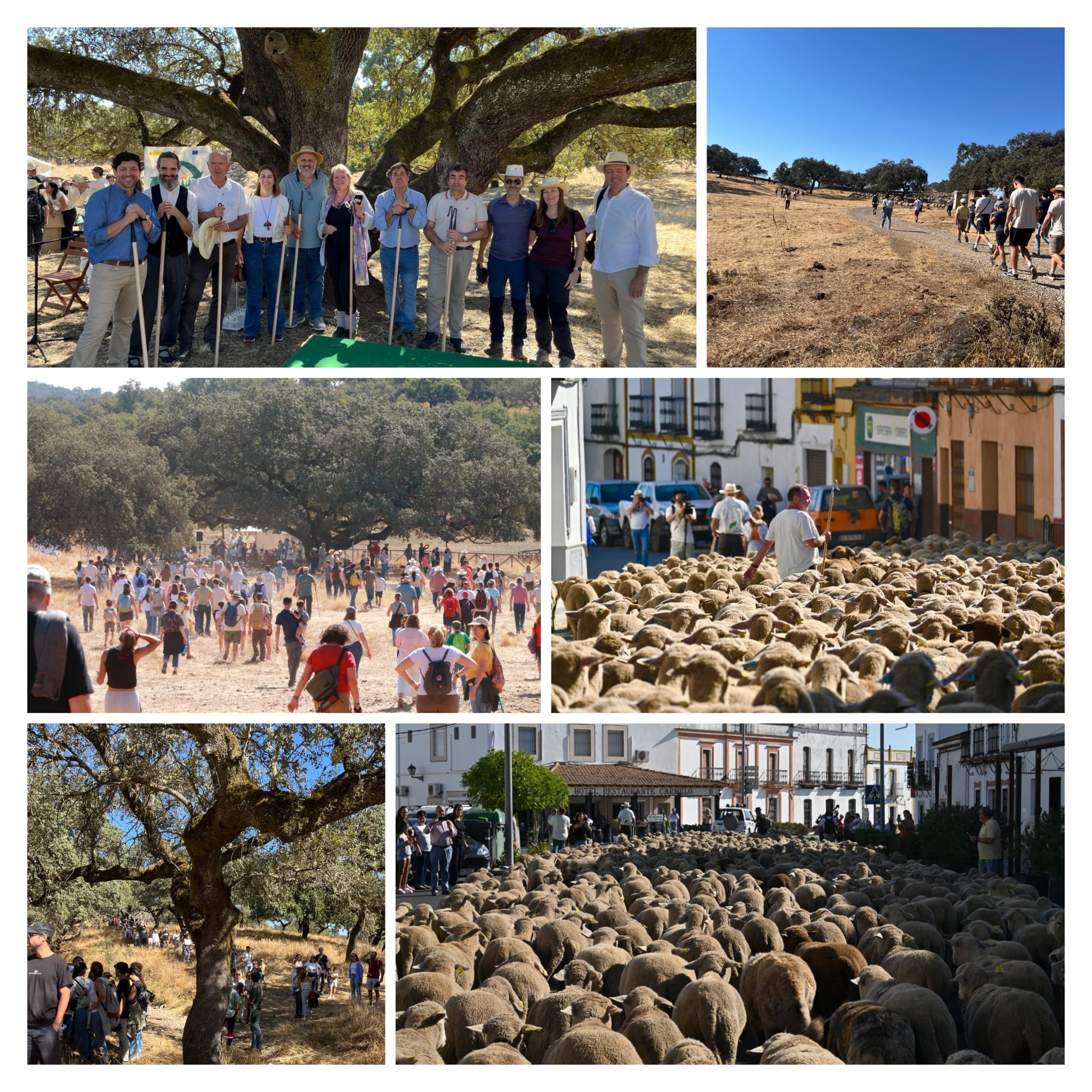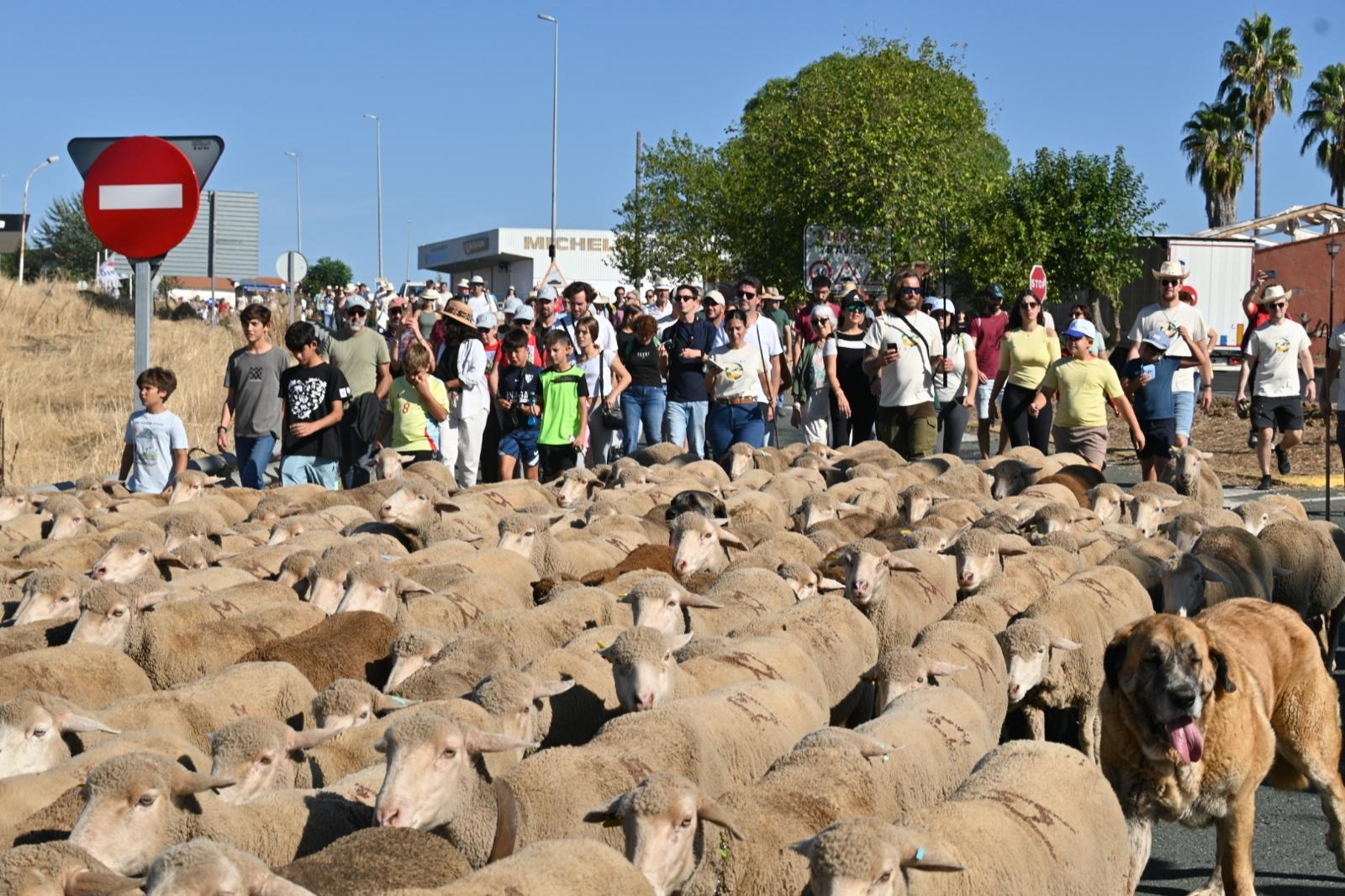
The organic Merino sheep have returned from the
mountain pastures of León to Dehesa San Francisco (Santa Olalla del Cala,
Huelva), in this occasion, passing right through the village in a festive,
community atmosphere that brought together more than 250 people. The event
aimed to highlight the importance of transhumance and organic extensive
livestock farming as a model of sustainable production.
Accompanied by local residents, visitors, and
representatives from collaborating organizations, the flock took center stage
in a day that underscored the role of transhumance in conserving biodiversity
and promoting the sustainable management of the dehesa ecosystem.
Speakers at the event included Ernestine Lüdeke
(President of Fundación Monte Mediterráneo), Álvaro Barrera Fernández
(President of Ecovalia), Manuel Calvo Villena (Secretary of La Nueva Mesta
S.A.T., President of Maratondog, and creator of Aventura Trashumante, an
initiative for children who have overcome cancer), Antonio José López Fernández
(Director of the Natural Park Sierra de Aracena y Picos de Aroche), Paco Casero
Rodríguez (President of Fundación Savia), Cristina Sierra Morato (Agricultural
Technical Engineer and organic livestock farmer from Santa Olalla del Cala),
Ángel Miguel Alonso Tornero (President of the Village Council of Salamón,
León), and Asunción Ríos Vázquez (Mayor of Santa Olalla del Cala).
The celebration concluded with a tasting of
organic roast lamb and a wool workshop, where participants of all ages
discovered the many possibilities of this natural material.
The BioNNOMÍA Project aims to develop a
management model that strengthens the bioeconomy and the functionality of high
natural value areas through organic extensive livestock farming and
transhumance. It is led by
Fundación Monte Mediterráneo, Fundación Centro de Servicios y Promoción
Forestal y de su Industria de Castilla y León (CESEFOR), Ecovalia, and the
University of León.
BioNNOMÍA is supported by the Fundación
Biodiversidad of the Spanish Ministry for Ecological Transition and the
Demographic Challenge (MITECO), within the framework of the Recovery,
Transformation and Resilience Plan (PRTR), financed by the European Union –
NextGenerationEU.