In the BioNNOMÍA project we address a
wide variety of topics, but we also dedicate time to learn about restoration
and cuisine under the guidance of leading experts. For this reason, recently,
on the informative visit in Salamón (León), with textile and restoration professionals,
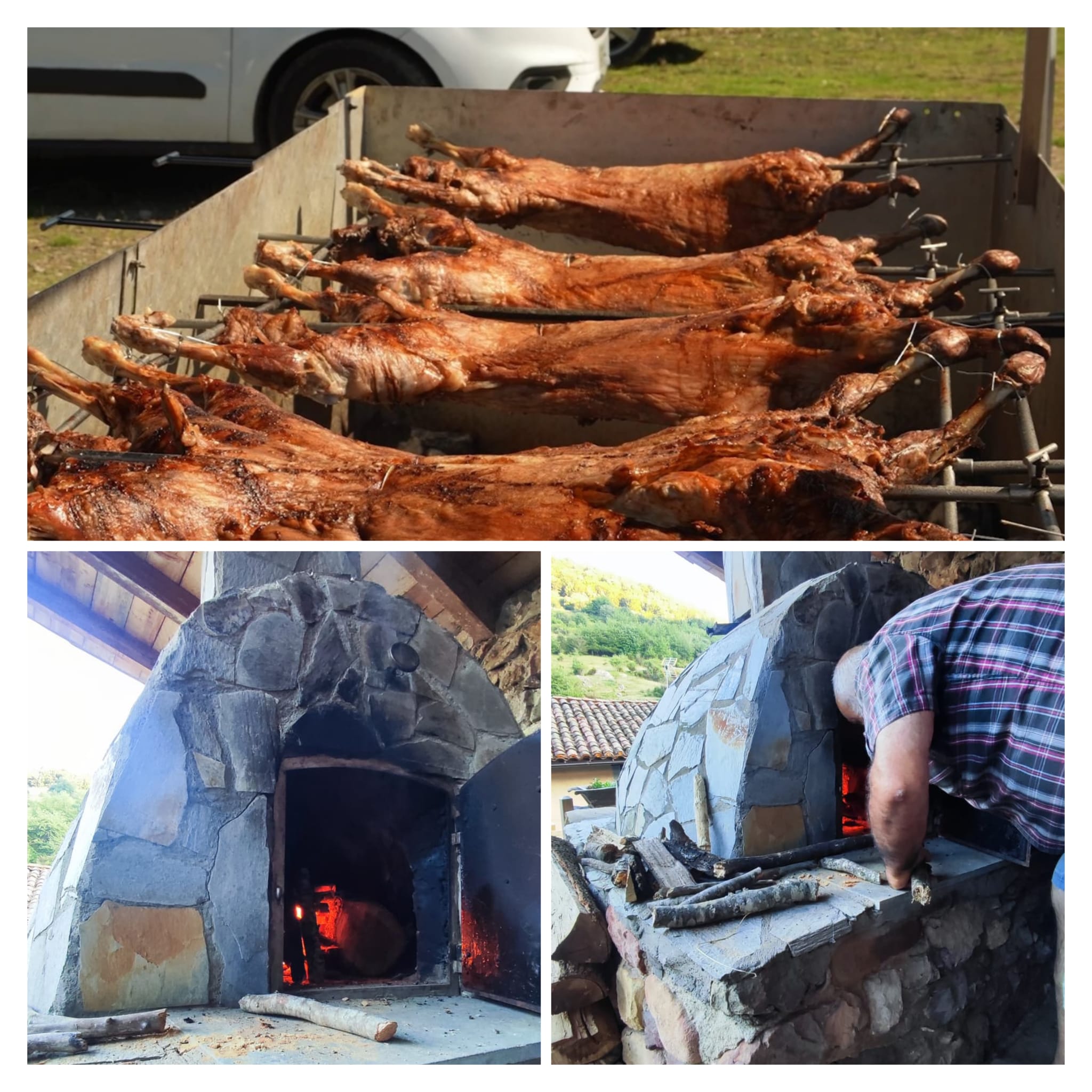
we had the privilege to learn from José Carlos Leal, grill master of CORDEREX. He
shared with us a key piece of information that directly affects the final
result: the paramount role of collagen. And to top off the experience,
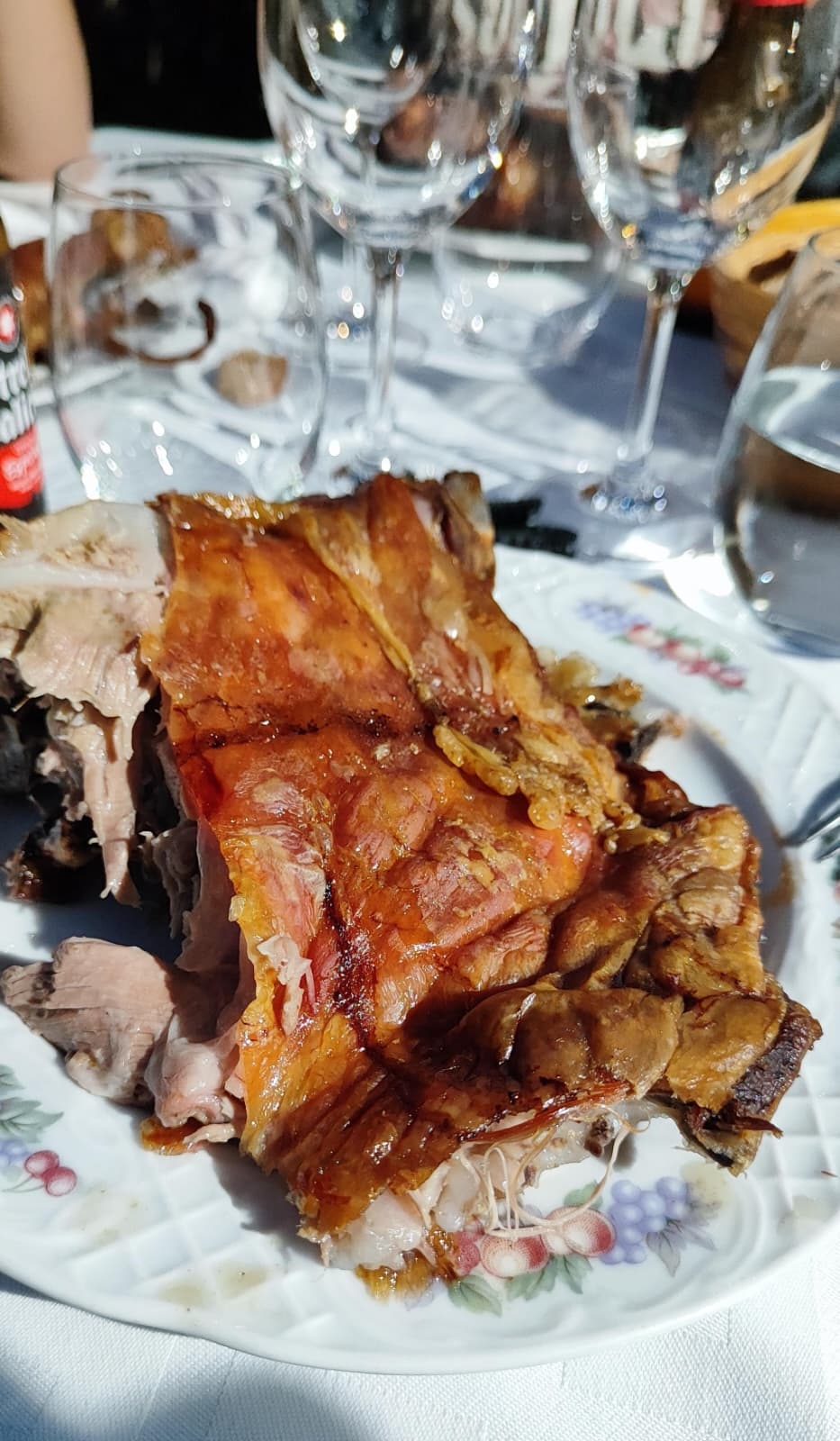
we had the opportunity to enjoy a delicious wood-fired roasted lamb.
How Does the Magic of Collagen Work?
Collagen is a fibrous protein found in the
connective tissues of meat. In its natural state, it is quite tough. However,
when heat is applied gradually and over a long period—as in slow roasting—its
structure changes completely.
The heat breaks down these collagen fibres and
transforms them into gelatine. This gelatine is what gives the meat that
silky, tender texture we all crave. As it melts, it spreads throughout the
meat, acting as an internal lubricant that not only softens the muscle fibres
but also traps the lamb’s natural juices.
The result is meat that’s not only easier to
cut and chew but also bursting with flavour and moisture.
Tips for Grilling at Home:
Slow cooking: Choose a low temperature and take your time.
It is the best method to allow collagen to gradually turn into gelatine.
Humidity: Keep the cooking environment humid to help
retain gelatine in the meat, maximizing juiciness.
Proper cooking time: Make sure the lamb is cooked long
enough for the collagen to fully break down.
Now you know. Next time you prepare roast lamb,
remember the power of collagen to achieve an extraordinary result.