On May 16 and 17, 2025, the Caminos Trashumantes
project moved to Trujillo after spending several weeks preparing a pilot
experience that would take place in this town in Cáceres on the first day, and
in Huertas de Ánimas on the second. Taking advantage of the fact that just nine
days earlier, José Manuel Sánchez Miguel had once again begun his annual
journey toward the León highlands (Puerto de Valverde de la Sierra),
accompanied by his flock of 1,700 sheep and his family, Caminos Trashumantes
decided to put into practice one of the project’s original ideas: to bring the
reality of transhumance closer to a sector of society — such as urban dwellers
and tourists — who are often unaware of it.
How? Through the aforementioned pilot
experience: organizing a full itinerary of activities on Friday, and
collaborating in the itinerary proposed by the Huertas de Ánimas Association
Platform on Saturday.
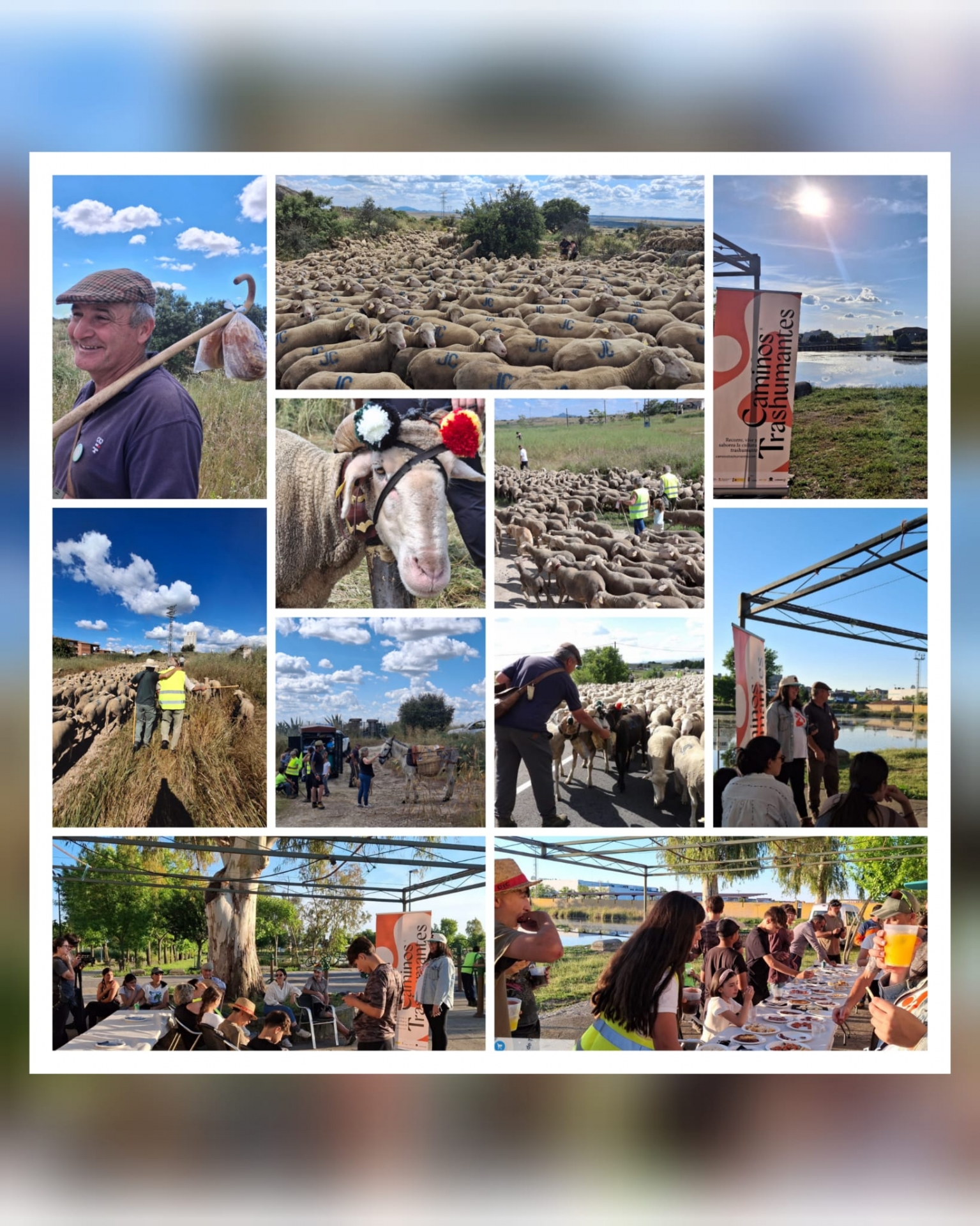
After five kilometres walking under the early
afternoon sun, we all arrived on the 16th at the San Lázaro pond area, where
the sheep could rest, be welcomed by the local community, and sleep until the
next day. Meanwhile, inside the pond enclosure, the companions joined us and
the tourists who had decided to embark on this adventure were already waiting —
a family of four (mother, father, and two daughters), who told us they had been
looking for an experience like this for years, without success. They were truly
excited, and we were determined not to let that feeling fade.
We started by introducing the activity, giving
a brief presentation of the project, and ended the day by encouraging community
and conversation, inviting everyone to share a dinner filled with stories —
away from the noise of daily life — just like the shepherds used to do when
they crossed paths on the transhumant trails.
During that evening, we took the opportunity to
remember the other founding principle of Caminos Trashumantes, as shared by
Kenza El Hemdi, project technician: "the importance of reviving the
millennia-old activity of transhumance and giving it value through the
development of these pilot experiences within our initial action area: the
Cañada Real Leonesa Occidental and the Cañada Real Conquense.”
The next morning, at 7:00 a.m., our alarms rang
and we began distributing breakfast (hot chocolate and churros) before heading
toward Huertas de Ánimas.
Once on the move, we realized that the warmth
of José Manuel’s family, the people we encountered along the way, and the
streets we passed through—each with its own story—created the perfect setting
to capture unforgettable moments of nostalgia and affection. These moments,
carried in their backpacks, would help José Manuel and his companions endure
the long months away from home.
While talking to the tourist family during the
walk, they shared a beautiful story: the father came from a family of livestock
herders, and the main reason for joining this pilot experience was that it was
a birthday gift. He even got so involved that he led one of José Manuel’s tamer
sheep along a stretch of the route.
Ultimately, these are the kind of experiences
we aim to tell through Caminos Trashumantes: immersive stories to be remembered
and later shared over a family lunch—such as the one our tourists enjoyed in
Huertas de Ánimas, where they got to taste a traditional lamb frite.
In Huertas de Ánimas, the 2nd Annual Tribute to
Transhumance left no one indifferent. Thanks to the organization (Platform of
Associations of Huertas de Ánimas), and especially to people like Emilio Curiel
and Antonio Donaire, both the roundtable of shepherds, the workshops, and the
tastings of local products provided the perfect finishing touch to José Manuel
and his family's farewell.
Before Saturday came to an end, the family
approached us to express how happy they were and how much they had enjoyed the
weekend. They noted how easy it had been to contact the Caminos Trashumantes
team and plan their visit. They had travelled from Valladolid for the sole
purpose of immersing themselves in the culture of transhumance and
shepherding—and without a doubt, they agreed it had been absolutely worth the
journey.
That is what Caminos Trashumantes is all about,
and we shared just that with the local journalist, Yolanda: “Caminos
Trashumantes is focused on two main lines of work. On one hand, we are
developing pilot experiences in our territory to bring tourists closer to rural
life, narrating stories of pastoral culture and transhumance, and making them
active participants in this collaborative, regenerative, and sustainable
tourism. These experiences will serve as a model to be adapted across the
country and enjoyed seasonally. On the other hand, we are working on the
creation of a Sustainable Tourism Product Club, designed to bring together all
stakeholders—both public and private—who are connected in any way to
transhumant culture (experiences, artisans working with sheep-based products,
cultural spaces such as museums or interpretation centers, etc.). We believe in
this platform—as a tool—to strengthen the project's sustainable value. Not just
for short-term initiatives with end dates, but as a foundation to continue the
work we’ve started: advocating for change, for a tourism of awareness rooted in
transhumant culture. Giving what’s traditional and forgotten a chance to become
what’s new and worth remembering.”