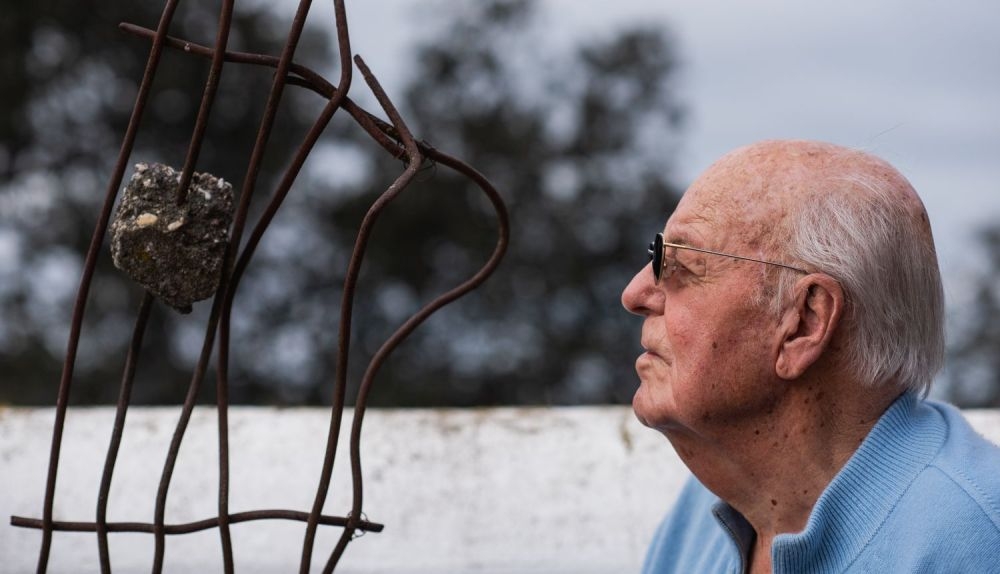
PHOTO: Hans-Gerd Neglein, in the report by lavozdelsur.es MAURI BUHIGASHans-Gerd Neglein is history itself, looking
you in the eye and speaking to you. Because he doesn't need to be told about
World War II. He was there. And he participated in that madness as a teenage
soldier, part of the youngest generation recruited, akin to what was called the
"baby bottle generation" during the Spanish Civil War. Yet, he
retains memories spanning nearly a century. Born in 1927 in the Ruhr region,
within Westphalia, encompassing Dortmund, Cologne, Düsseldorf.
His father was a doctor, he recounts, but his
parents separated, and young Hans stayed with his mother at the age of five.
She then joined a young engineer who had tried to make a living in the United
States but returned to Germany due to the 1929 crisis. He became Hans's
stepfather and found a place in the German army, which Adolf Hitler, already in
power, was silently rearming, defying the peace treaty that followed World War
I.
_________________________________________________________________________________________________________________________________________________________
"We
heard screams near the station. They told us they were people going to work in
agriculture. Today we know they were going to Auschwitz."
_________________________________________________________________________________________________________________________________________________________
"At 15 and a half, I was forcibly
recruited," he recalls from a farm in the town of Santa Olalla del Cala,
at the junction of Huelva, Seville, and Extremadura, where he started a
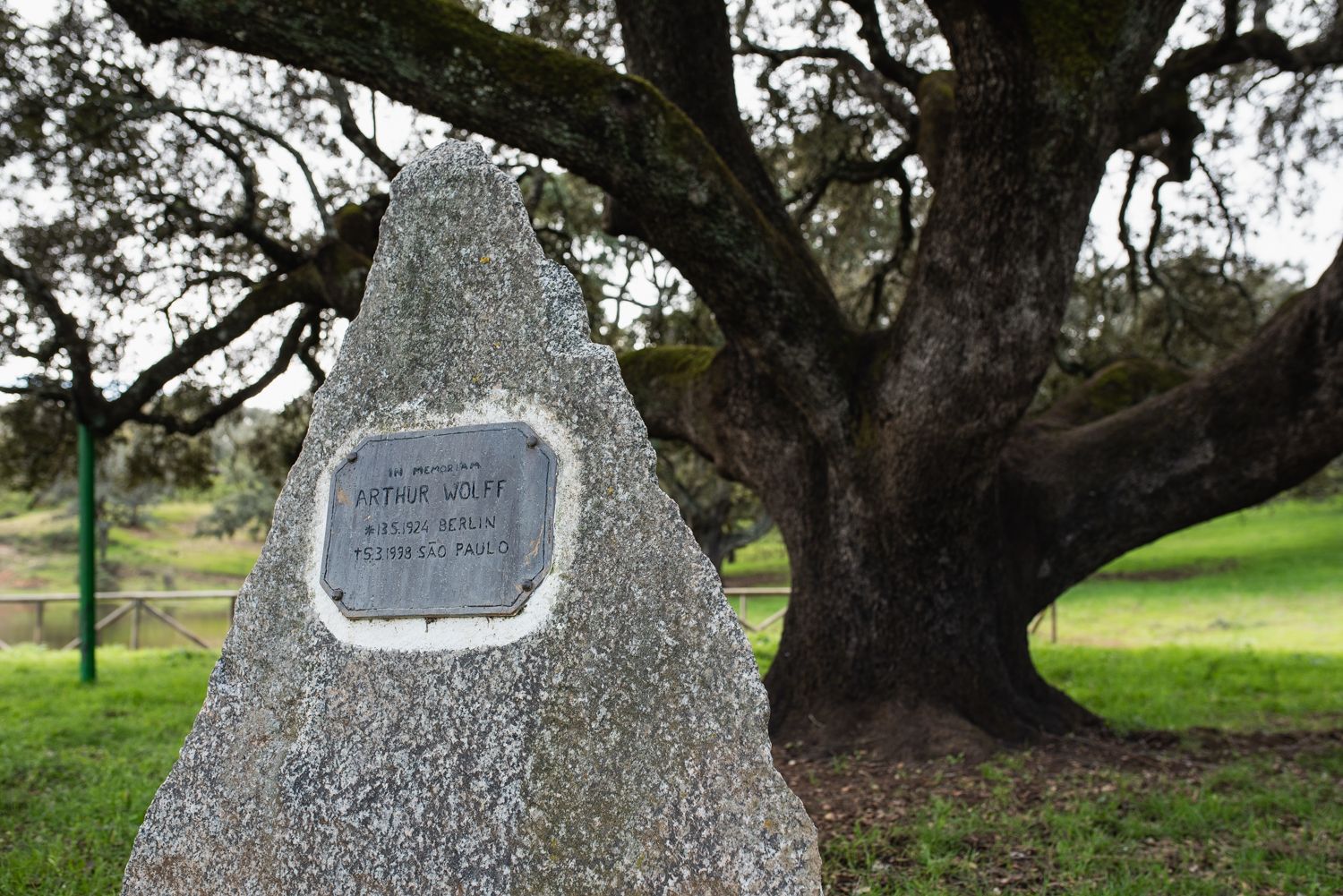
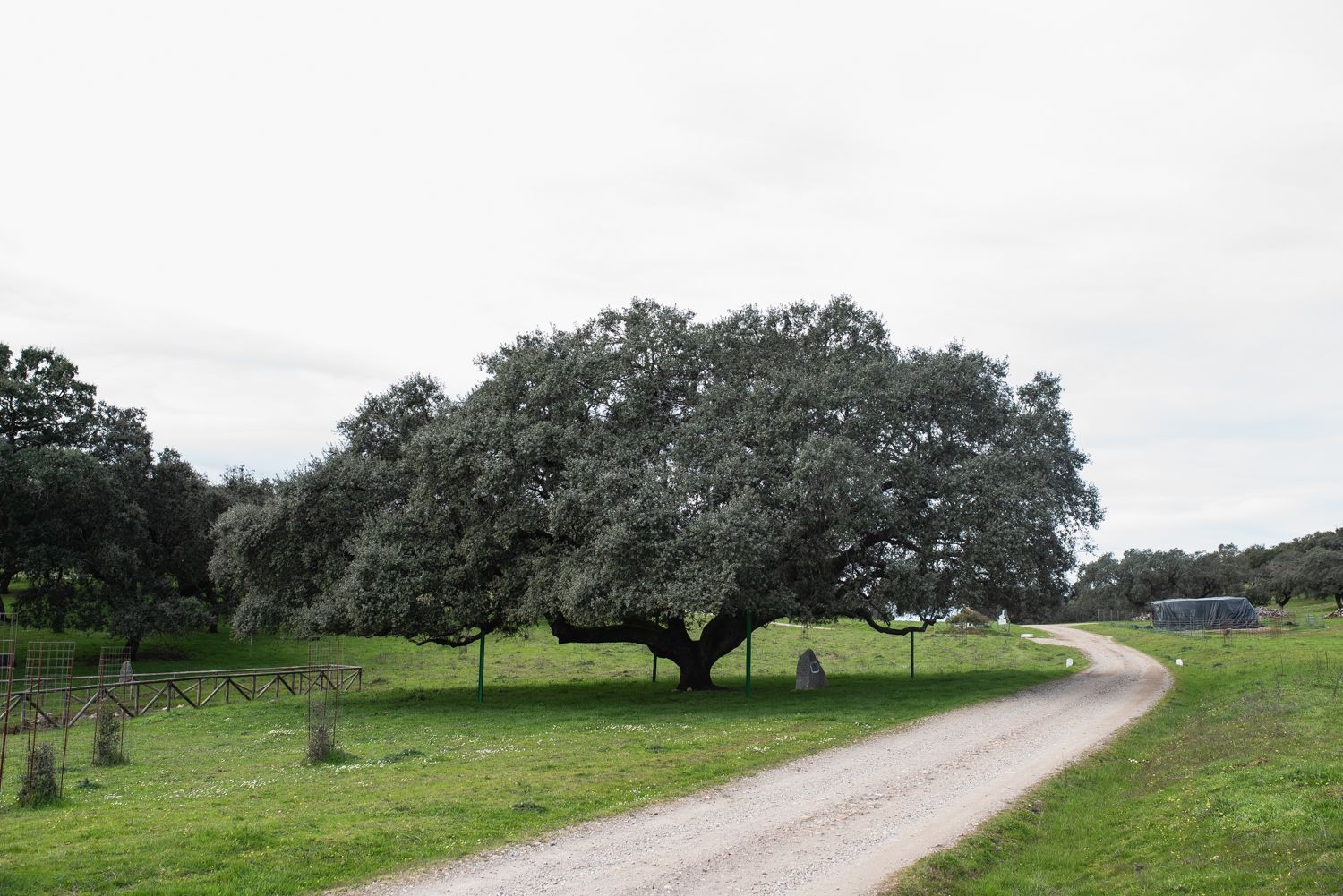
foundation to defend Doñana and the dehesa. At the entrance of the farm stands
an almost 500-year-old holm oak, declared a natural monument, dedicated to
Arthur Wolff, a German Jew who, after World War II, went to Brazil to rebuild
his life. One of Hans's best friends, symbolizing the reconciliation that came
after the madness of war. After all, he was a Nazi child soldier, a minor in a
military uniform.
"He had survived Hitler's great death march. They took him to Austria on foot to work in what the Nazis claimed was the factory of the miracle weapon that would win the war." They walked through snow and cold, ill-prepared, coming from concentration camps. Fainting from pneumonia, Arthur surrendered, and the soldiers didn't kill him because they thought he was already dead. He managed to hide in a hayloft, thanks to a German soldier who had deserted. "He was unconscious for six weeks but miraculously survived and went to Brazil." Hans and Arthur met in 1961 while playing golf.
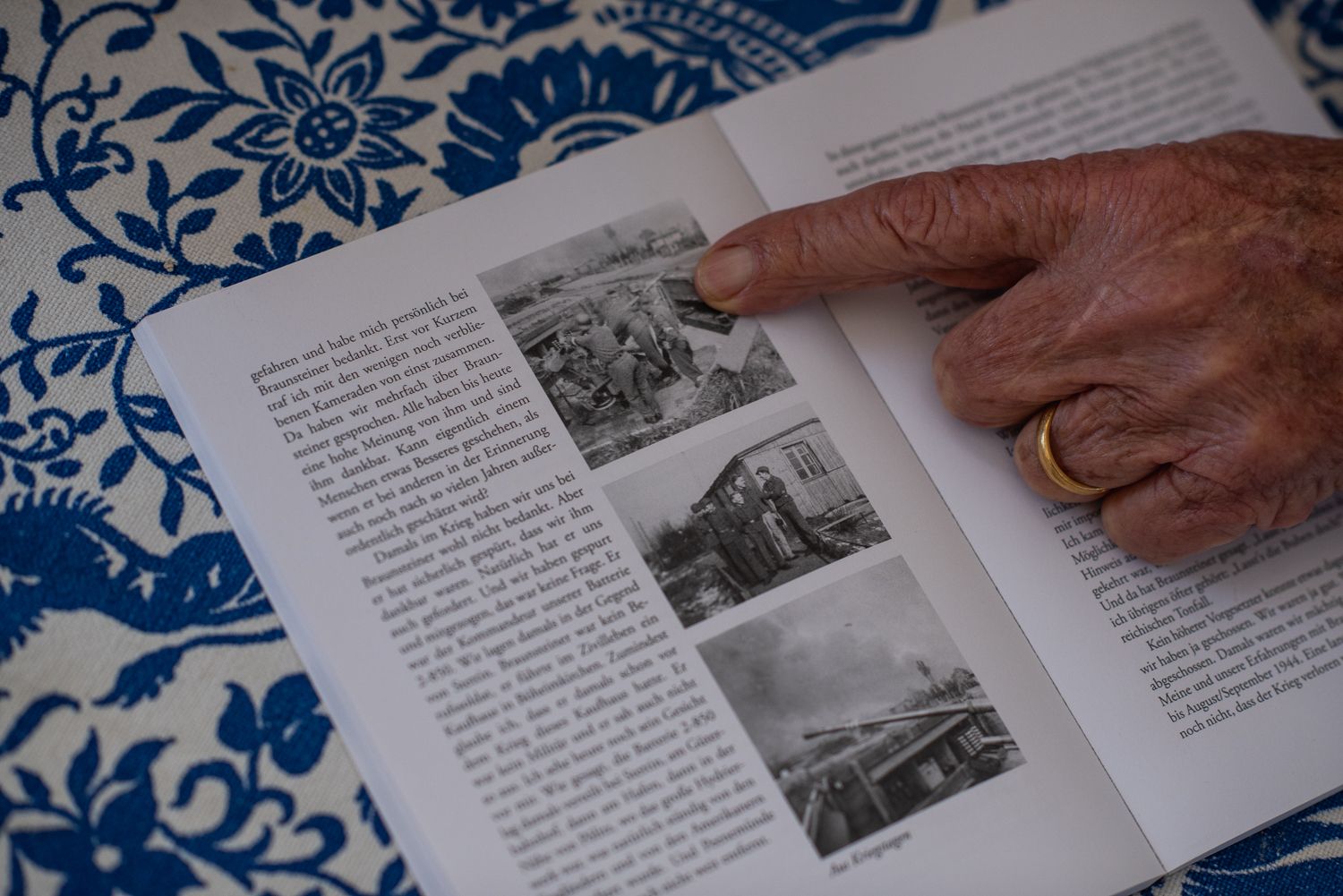
During the war, Hans recalls being assigned tasks like manning anti-aircraft batteries in Szczecin, now part of Poland. He witnessed the trains heading to Auschwitz, the Holocaust convoys. And he heard them. "One day, we heard screams while passing near a station. Some people told us they were going to western Germany to work in agriculture... Today we know they were transports to Auschwitz."
PHOTO: An image of Hans during the war, from his self-published book in German, currently being translated into Spanish. MAURI BUHIGAS
World War II and Nazism resulted from many factors. In the ideology of National Socialism, there are precedents dating back many decades, such as the theorization of racism. Nineteenth-century scientists studied human biology more deeply than ever before, traveling the world, especially Africa, to determine differences between peoples. And there were more recent precedents. In Germany, a strong resentment emerged after the treaty following World War I, which punished the country as the loser for having initiated that conflict. Additionally, affluent classes across Europe supported fascism as a guarantee against Soviet communism and its dangerous ideas threatening their interests.
In pre-1939 Germany, the year World War II
began, "we were indoctrinated against Jews," Hans recalls. "When
Hitler took office, I was six years old." In school, he already received
those anti-Semitic messages. Nazi propaganda, meticulously studied in
universities worldwide to this day, reached all layers of society. They
targeted Jews, but also communists and anyone who didn't follow the behavioral
rules, those they considered delinquents. This last group included gypsies,
homosexuals...
_________________________________________________________________________________________________________________________________________________________
"Today
in Germany, people don't speak well of Hitler, but they do of his
policies," Hans laments.
_________________________________________________________________________________________________________________________________________________________
Now, looking back, he can only reject the AfD, Alternative for Germany, which polls show as the second political option among Germans, hovering around 20%. AfD politicians have been prosecuted for paraphrasing Hitler, as Nazism is officially banned in Germany. But the far-right sneaks through democracy's door almost without stealth. "I am totally against the AfD," Hans explains. Their messages are directly "not against Jews, but against immigrants."
In Germany, he laments, "although people
don't speak well of Hitler, they do of his policies. If someone says Hitler was
fantastic, they go to trial, but there are people who think positively of him.
The AfD has a Nazi spirit." Hans, who has been a top businessman, has
voted for the conservative CDU, Angela Merkel's party. But now, "I will
never support them." Because that so-called sanitary cordon in Parliament
has broken, and both parties voted in favor of a motion this past January
against migration, against asylum seekers. Because a witness of that time can
only reject ideas related to the horror of Nazism.
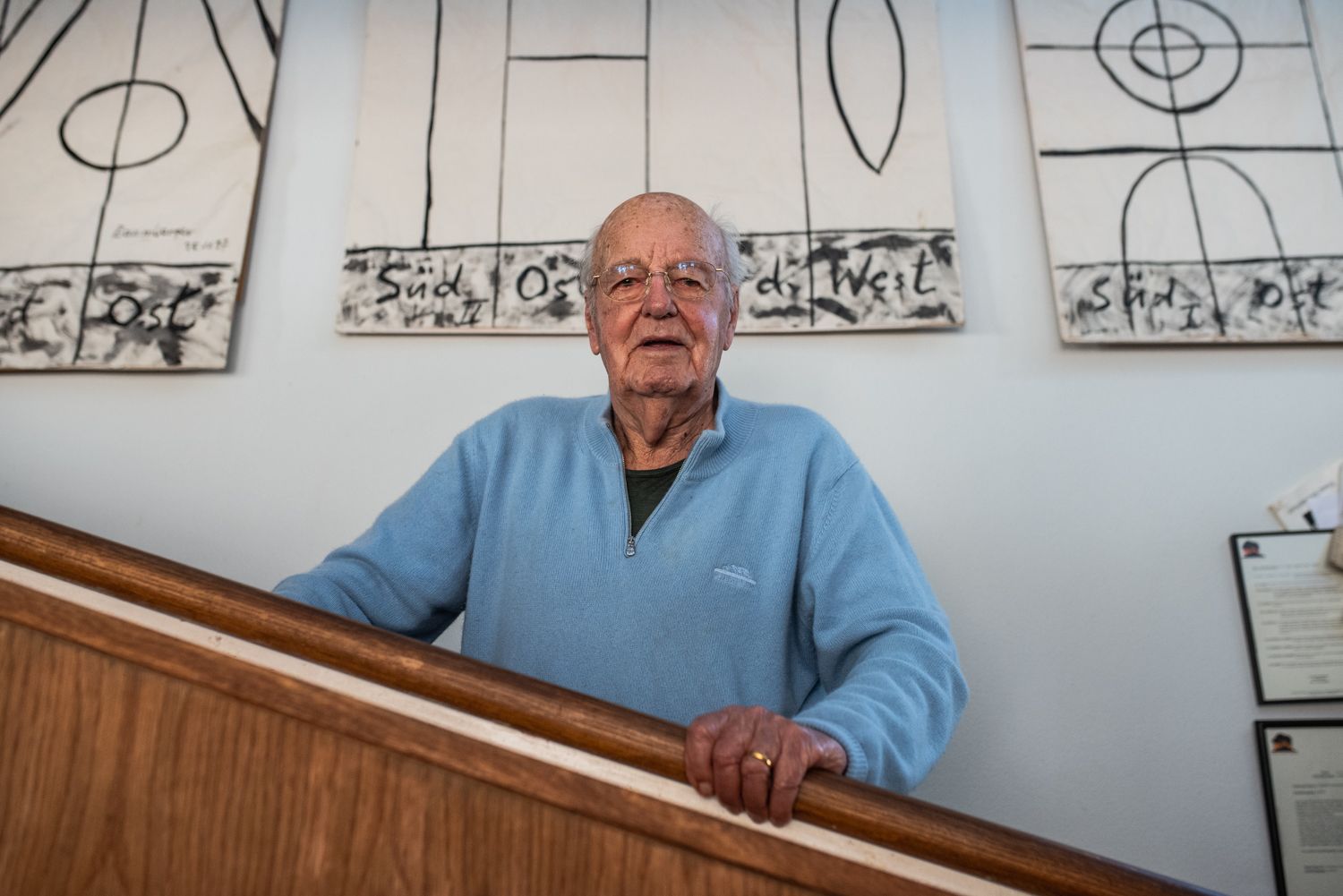
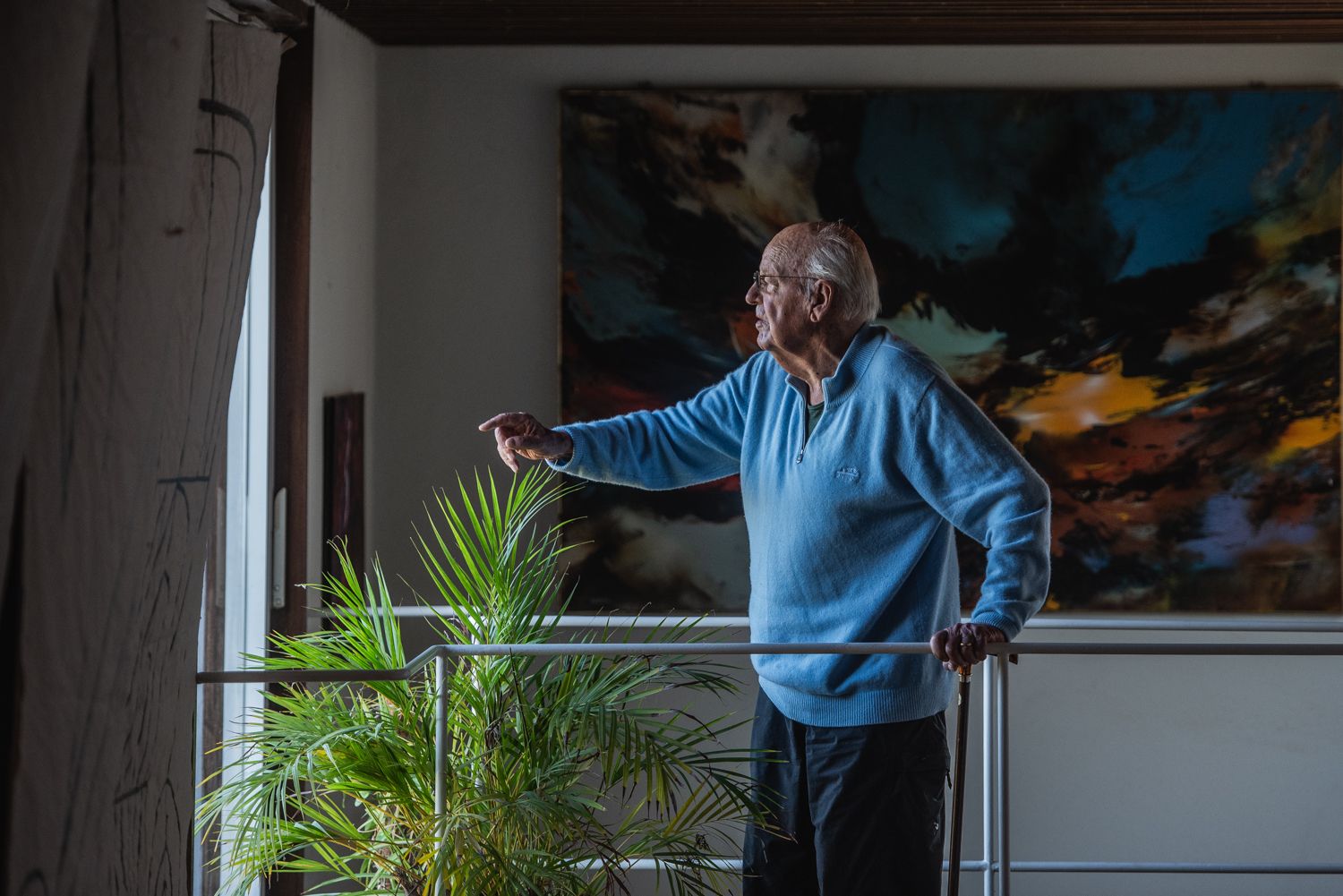
PHOTO: Hans, in the residence at Dehesa San Francisco. MAURI BUHIGAS
Hans is very concerned about what's happening, how similar that time is to the present, he warns. He even wrote a book recounting his experience in World War II, which he speaks about naturally, not wanting anyone to forget. That book, originally in German, is being translated into Spanish.
Life After the War
In 1944, Hans's stepfather died in an armored
vehicle during a battle against the Allies. A year later, Hitler committed
suicide in his Berlin bunker, and Nazism surrendered, to humanity's relief. The
toll: several tens of millions of deaths. About twelve million people in the
macabre extermination and concentration camps, half of them Jews.
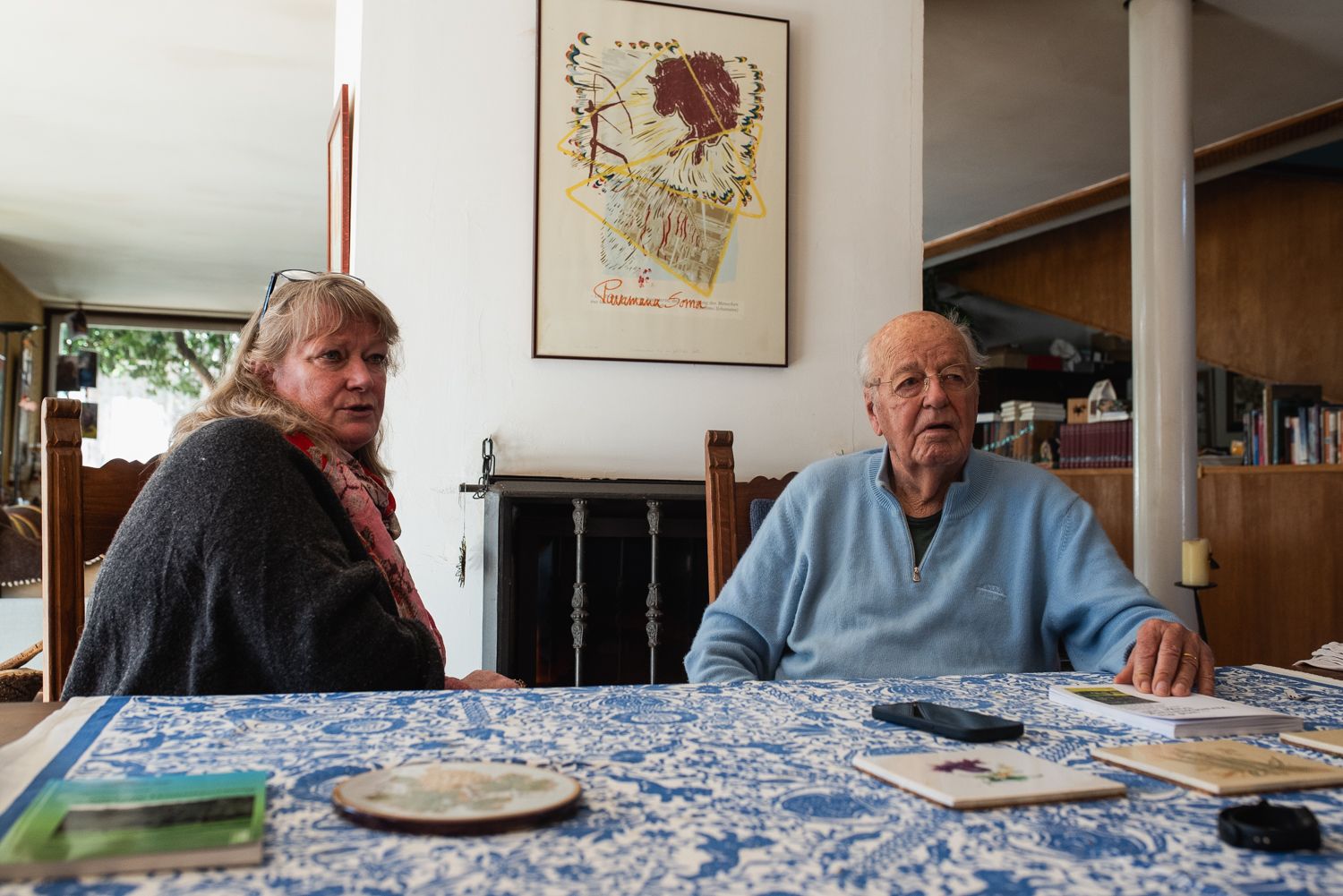
PHOTO: Hans with Ernestine, his wife, also German, and key to his love affair with Doñana and the dehesa.
MAURI BUHIGAS
Germany lay in ruins. But industries quickly restarted, thanks mainly to the Marshall Plan. While high-ranking Nazis were tried in Nuremberg for their crimes against humanity, the rest of the country had to rebuild. Hans returned to his studies. At 18, he was already a former combatant.
_________________________________________________________________________________________________________________________________________________________
"It was impossible to study medicine after the war."
_________________________________________________________________________________________________________________________________________________________
For boys like him, quick courses were designed to enter the workforce. Something reminiscent of today's Dual Vocational Training: he studied in classrooms but was also trained by the companies themselves. He spent some time enduring the hard life of the countryside, but an opportunity arose at Siemens. "I wanted to study medicine, like my grandfather, like my father, but it was impossible." His mother depended financially on him because it wasn't until a few years later, in the 1950s, that she began receiving the army widow's pension.
Furthermore, the country was controlled. British, French, and American forces took control of West Germany, the Federal Republic. The Soviets did the same in their eastern side, the Democratic Republic, which would remain two separate countries until the fall of the Berlin Wall and the dissolution of the USSR. In that context of effective occupation by the Allies, moving from one city to another was limited, so only those who had a university in their city could study medicine.
180,000 people under his charge at Siemens
Hans went from the countryside to Siemens after finding himself with barely any resources. He rose through the ranks from apprentice to becoming one of the top executives in the company. In 1953, once his mother could live off her pension, he left at the age of 27. During World War II, many countries around the world expropriated German assets and companies. In those years, while the Federal Republic was trying to rebuild its international reputation, numerous negotiations took place at many levels to recover that heritage, which was key for Germany to become a power once again, though this time within a democratic Europe. He was offered two destinations if he wanted to leave the country: India and Brazil. He chose the latter. At 27, he found himself in South America, not speaking a word of Spanish or Portuguese, adapting to a new climate and culture. Rio and São Paulo, no less, with two years also spent in Colombia.
PHOTO: The plaque in memory of Arthur Wolff. MAURI BUHIGASPHOTO: The 500-year-old holm oak at the entrance of Dehesa San Francisco, part of the Monte Mediterráneo Foundation. MAURI BUHIGASHe managed to recover the factory and multiplied the number of employees to 4,000. During those years, he met his soul friend Arthur while playing golf. Arthur passed away in the 1990s, and before his death, Hans promised to place his name under the five-century-old oak tree on the estate.
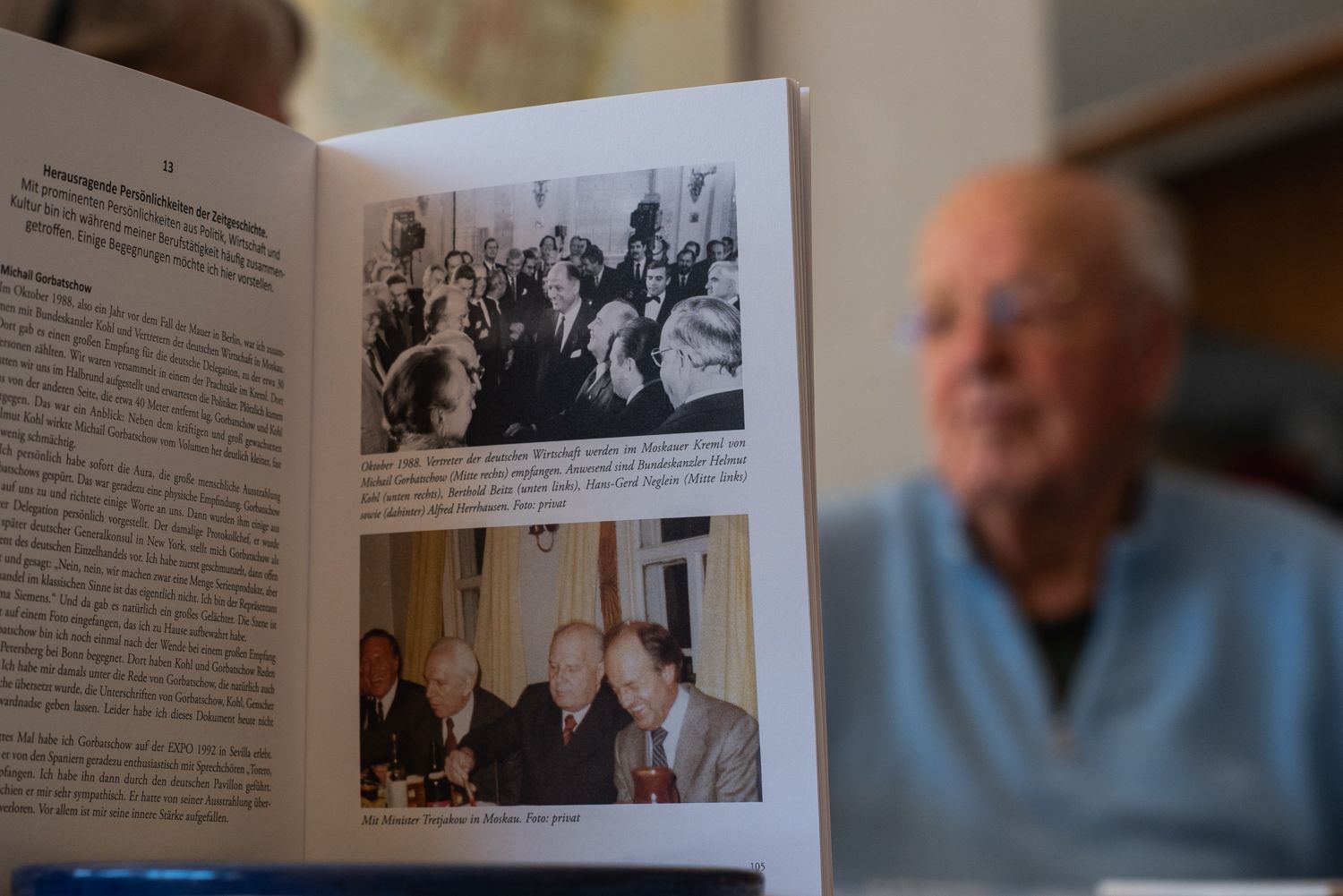
Hans stayed in Brazil until 1968, where the children from his first marriage were born. He was called back to Germany and eventually became the CEO of Siemens Sales. By volume, he had "180,000 people under his charge." He has photos with many world leaders, with whom he frequently met for projects: with Gorbachev, King Juan Carlos I, and others. He played a key role in the construction of the Itaipu Dam, the world’s largest hydroelectric power plant at the time, until China’s Three Gorges Dam surpassed it in 2011.
And Seville in '92
Among his positions, although not living in the country, he also served as president of Siemens Spain. He retired in 1992, just a month before the Seville Expo began. In Germany, it is a tradition, he explains, to offer the role of general commissioner of the German delegation at major events to a prominent businessman. Thus, he found himself leading the German pavilion. Initially, it was to represent the Federal Republic of Germany, but after reunification, he had to reorganize the pavilion to include unified Germany. He had to change the entire program, guest participation, design... to celebrate the renewed unity before the world.
While preparing the German pavilion, he met
Germans holding key positions in Spain. That’s how he met the young Ernestine
Lüdeke, three decades younger than him. They fell in love and are still
together today. She worked at the Spanish Ministry of Culture, in offices like
that of Jorge Semprún. A Hispanic philologist living in Madrid in the late '80s
and early '90s, who also fell for the splendor of Doñana.
PHOTO: Hans at the foundation's residence in Santa Olalla del Cala. MAURI BUHIGASPHOTO: Hans with Gorbachev in Moscow, shortly before retiring. MAURI BUHIGASWhen the Expo ended, Hans decided to move to
Spain. But not to Marbella or Mallorca, like many other German retirees. He had
money from his years at Siemens and a few final years to enjoy it. But he chose
to start over from scratch, driven by a growing concern for a major threat to
the world: climate change. Doñana is what separates the Sahara Desert from the
rest of Europe. Keeping the park alive is crucial for the entire continent.
The life of a general commissioner in the 1992
Cartuja was almost like that of a head of state, as that was the level of
figures he hosted. He was provided with a chauffeur, a house... But he
dedicated himself to getting to know the park better, immersing himself in its
history and needs. First, both he and Ernestine collaborated with the Doñana
Foundation, increasingly seeking more funds for its conservation.
"We sold the tickets we received for Expo concerts at the Maestranza." They even managed to sell a pin for 5,000 pesetas to King Juan Carlos when he visited the German pavilion. Instead of the usual 100 pesetas, the person accompanying the king had no change. The king never got his change back, and those 30 euros in today’s money also went to Doñana.
Finally, the couple embarked on a new
adventure: the Monte Mediterráneo Foundation, aimed at preserving the dehesa in
the northern Sierra of Huelva province. An estate that holds a piece of the
Berlin Wall, with iron bars surrounding a stone. Direct witnesses, like Hans,
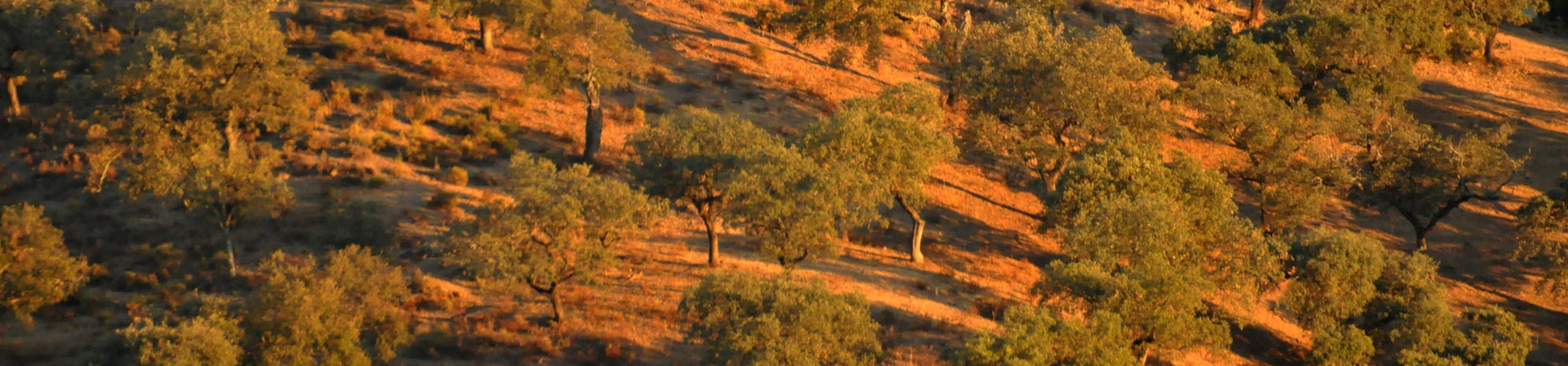
of the madness of the 20th century. Vultures circle this corner of Dehesa San
Francisco, the area managed by the foundation, spanning several hectares. But
that is another story. This is Hans’s story, who is now retired from such
activities, as the foundation is currently led by Ernestine.